

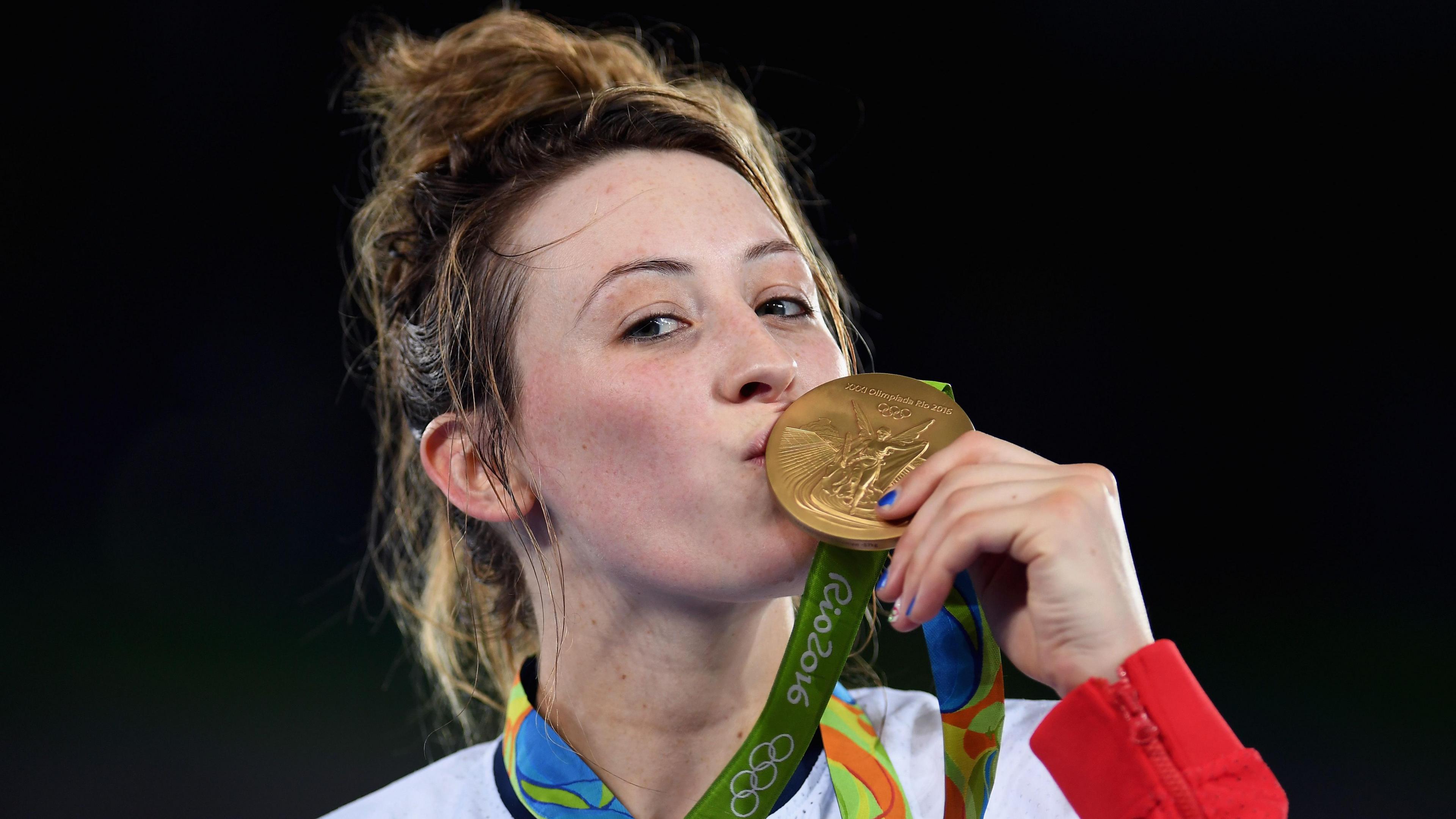
Double Olympic champion Jade Jones believes being diagnosed with ADHD helped her to make sense of her struggles – as well as her greatest successes.
Now the 33-year-old from Flint believes her neurodivergent trait is aiding her ambition to make a fist of her switch from taekwondo to boxing as she prepares for her second fight in her new sport.
Jones became one of the headline stars at London 2012 when she won taekwondo gold while still a teenager, successfully defending her title at Rio 2016 to underline her status as one of Wales' greatest Olympians.
But after difficulty dealing with lockdowns and disappointments at the Tokyo and Paris Games, Jones says a diagnosis helped her understand something that was perhaps obvious to others.
"It was weird because I always used to struggle in ways that other people wouldn't," says Jones, who was first taken to taekwondo sessions by her grandfather to keep the "mischievous" eight-year-old out of trouble.
"I think [it was the] Covid [lockdown] that brought it out, when you have a bit more time with yourself.
"I got diagnosed [with ADHD] after the Olympics because things went to pot a little – and I'm not blaming it on that, but there were certain things I couldn't handle and didn't understand about myself.
"When I got diagnosed everybody was like 'of course!' – and I said they could have told me!"
Jones says the penny dropped after the diagnosis, allowing her to understand how she was able to "hyper-focus" on her sport at the highest level for so long.
"And that's the important thing because you can see it as a negative," adds Jones.
"But if I didn't have ADHD I genuinely don't think I would have succeeded in everything I've done so far. So it is like a superpower."
Jones is not alone as an elite sportsperson who has the neurodivergent condition, with England footballer Lucy Bronze and England rugby union prop Hannah Botterman among those sports stars who have spoken publicly about their diagnosis.
